
BLOG
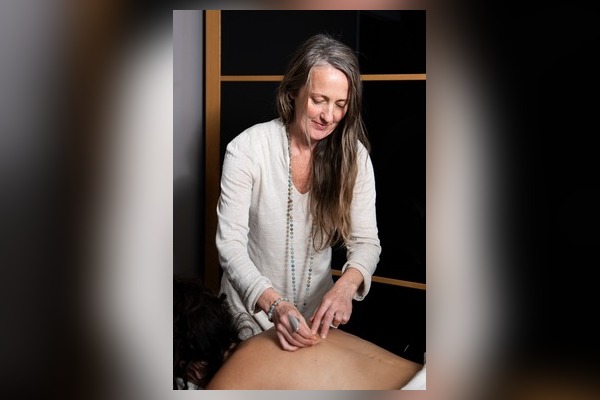
Acupuncture for Anxiety & Stress in Muskoka | Cedar Healing Arts
denAcupuncture for Anxiety, Stress and Burnout: What the Research Actually Shows
Short answer:
Yes, acupuncture has been studied for anxiety in dozens of randomized controlled trials, and the pooled evidence consistently shows reduced anxiety scores compared with no treatment, sham needling, and in several reviews, compared with medication alone. A 2025 review of 41 trials involving 3,209 people found acupuncture reduced Hamilton Anxiety Rating Scale scores more than medication alone and more than sham acupuncture, with fewer side effects (PubMed).
Most people begin to notice a shift within the first 3 to 5 sessions, with a typical course of 1 to 2 sessions per week for 4 to 6 weeks.
If you're already ready, you can book an initial acupuncture appointment in Gravenhurst here.
The kind of stress most people bring through the door
It usually isn't one dramatic thing. It's the accumulation of stress in your life.
You're waking at 3 a.m. with your jaw clenched. Your chest feels tight for no reason you can think of. You're tired but wired, too depleted to function, too activated to rest. Your digestion is off. Your cycle is off. You snap at people you love, and then you feel guilty about that too.
You've probably already tried to think your way out of it. That rarely works, because this isn't a thinking problem. It's a nervous system stuck in a protective pattern, sympathetic activation that never got the signal that the threat had passed.
Acupuncture works at that level. Rather than talking about the pattern, it interrupts it physically.
What acupuncture is actually doing for stress and anxiety
In Chinese medicine terms, chronic stress and anxiety are often described as constrained liver qi, disharmony between the heart and kidney, or depletion of yin that can no longer anchor the mind. The classical picture - irritability, insomnia, sighing, a knot in the throat, palpitations - maps closely onto what modern medicine calls dysregulated stress physiology.
From a research standpoint, the mechanisms being investigated include:
Nervous system effects. The U.S. National Center for Complementary and Integrative Health notes that studies in animals and humans, including brain imaging studies, show acupuncture "may affect nervous system function" (NCCIH).
Stress hormone regulation. In a 2021 placebo-controlled trial of 56 people with chronic insomnia, participants receiving real acupuncture showed a significantly greater drop in serum cortisol and a significantly greater rise in serotonin (5-HT) than the sham group, both at p<0.01 (Annals of Translational Medicine).
HPA axis modulation. Animal research has shown acupuncture downregulating CRH and ACTH receptor expression under stress conditions — the hormonal cascade that keeps the body in alarm (PubMed).
Helpful Acupuncture Points Used in Trials:
Across anxiety and insomnia trials, a small handful of points recur:
Shenmen (HT7), Yintang (GV29), Baihui (GV20), Sanyinjiao (SP6), Taichong (LR3) and Neiguan (PC6).

The evidence, plainly stated
Here is what the published literature reports. These are group averages from research studies, not predictions about any individual person.
Anxiety
Several large reviews suggest acupuncture may help reduce anxiety symptoms:
A review of 20 clinical trials found that acupuncture reduced symptoms of generalized anxiety more than the comparison treatments. It was also generally well tolerated, with few safety concerns (BMC Complementary Medicine and Therapies).
A 2025 review involving 3,209 people found that acupuncture performed better than medication alone, simulated acupuncture, and medication used by itself. Combining acupuncture with medication produced greater improvements than medication alone. People receiving acupuncture also reported fewer side effects (PubMed).
Another 2025 review found that acupuncture reduced generalized anxiety more than simulated needling. Participants also experienced improvements in sleep and mood (Frontiers in Neurology).
A review of 20 trials involving 1,462 people found that manual acupuncture reduced anxiety more than simulated acupuncture, usual care, or being placed on a waiting list. Some benefits remained after treatment ended (Journal of Clinical Psychology).
Smaller studies have found encouraging results too. In one study, 40 adults with persistent anxiety received acupuncture for ten weeks. Their anxiety scores fell considerably, while scores in the waiting-list group barely changed. These improvements were still present ten weeks later (Acupuncture in Medicine).
Another study followed 64 people living with Parkinson’s disease and anxiety. Eight weeks of acupuncture produced a greater reduction in anxiety than simulated acupuncture, particularly when researchers followed up later (JAMA Network Open).
Taken together, the research suggests acupuncture may offer meaningful support for anxiety. However, study quality, treatment methods, and individual responses vary.
Sleep, which is usually tangled up with the anxiety
A 2021 clinical trial examined acupuncture for insomnia. After 12 sessions over four weeks, participants receiving acupuncture reported substantial improvements in sleep quality. These improvements remained three months later.
The simulated-acupuncture group experienced a smaller initial improvement. By the three-month follow-up, their sleep scores had returned close to where they began. Anxiety also improved in the acupuncture group but changed very little in the comparison group (Annals of Translational Medicine).
That follow-up is important. The improvement did not simply disappear when the treatment sessions ended.
Burnout
There is much less research on acupuncture for burnout, so the findings are still preliminary.
One small study in Geneva followed 11 adults experiencing burnout. After approximately nine acupuncture sessions, participants reported less emotional exhaustion and detachment. They also felt a stronger sense of personal accomplishment.
Researchers observed biological changes connected with dopamine signalling and the production of stress-related hormones. These findings suggest acupuncture may influence some of the systems involved in stress and recovery (Complementary Medicine Research).
This was a very small study without a comparison group. Treatment also included supportive listening and lifestyle guidance. Therefore, researchers cannot say how much of the improvement came from acupuncture itself.
Still, the results offer a promising direction for future research.

What actually happens in a session at Cedar Healing Arts
We talk first. A Chinese medicine intake looks at sleep, digestion, cycle, appetite, temperature, energy patterns through the day, and what your life has been asking of you. I check pulses and look at your tongue. This is where the pattern gets identified — two people with the same anxiety label often need entirely different treatments.
The needles. Very fine, sterile, single-use. Most people are surprised by how little they feel. Common sensations are a brief dull heaviness or warmth, then nothing.
The rest. You lie still for 20 to 30 minutes with the needles in. This is where the parasympathetic shift tends to happen. Many people fall asleep. Almost everyone describes some version of dropping down a level.
Depending on what you need, a session might include sound, gua sha, ear seeds, Zen shiatsu elements, seasonal dietary guidance, or a qi gong practice to take home. Acupuncture supports the return to balance; your practices deepen that relationship over time.
Afterward, expect to feel calm and sometimes pleasantly heavy for a few hours. Sleep is often the first thing to change.
Book your first acupuncture session in Gravenhurst →
Already a client? Book your follow-up appointment here →
How many sessions, and how soon
Based on how the trials are designed and how the research reports timing:
Sessions 1–3: sleep and physical tension usually shift first. One study of anxiety patients recorded significant reductions by the fifth session (Journal of Complementary and Integrative Medicine research summary).
Sessions 4–8: mood and baseline reactivity typically follow. Most trials treated 2 to 3 times weekly for 4 weeks, totalling 8 to 12 sessions.
Beyond that: many people move to maintenance every 3 to 6 weeks, often timed to the seasons.
Frequency matters more than total number at the start. Weekly for six weeks does considerably more than six sessions spread over six months.
Serving Gravenhurst and all of Muskoka
Cedar Healing Arts is located at 193 Maple Heights Drive, Gravenhurst, Ontario P1P 1R1. Treatment is provided by Sonja den Elzen, R.Ac, a Registered Acupuncturist with the College of Traditional Chinese Medicine Practitioners and Acupuncturists of Ontario (CTCMPAO).
Clients travel to the clinic from across the region:
Gravenhurst — the clinic is minutes from the town centre
Bracebridge — Clinic is roughly 20 minutes south on Highway 11 or Muskoka Beach Road
Orillia — Clinic is roughly 25 minutes north
Bala and Port Carling — roughly 20 to 25 minutes
Huntsville — Clinic is roughly 45 minutes South
Muskoka Lakes, Severn Bridge, Washago and Torrance — all within a comfortable 15 - 20 min. drive
Extended health benefits: Acupuncture with a Registered Acupuncturist is covered under many Ontario extended health plans. Receipts are provided for direct submission to your insurer.
Frequently asked questions
Does acupuncture really work for anxiety, or is it placebo?
Both real and sham acupuncture reduce anxiety in trials, which tells us that context and care matter. But when the two are compared head to head, real acupuncture consistently comes out ahead — a meta-analysis of 14 sham-controlled trials found a significantly greater reduction in Hamilton Anxiety scores with real needling (MD −2.71, p=0.0003) (Frontiers in Neurology).
Does acupuncture hurt?
The needles are far finer than injection needles. Most people feel a brief dull ache, warmth, or heaviness at insertion, then nothing. Many fall asleep during the treatment.
How many sessions will I need for anxiety or stress?
Most research protocols used 8 to 12 sessions over 4 weeks. Clinically, a reasonable starting plan is once or twice weekly for 4 to 6 weeks, then reassessing. Sleep tends to shift earliest.
Can I have acupuncture if I'm taking anti-anxiety medication or an antidepressant?
Yes. Research has looked specifically at acupuncture combined with medication and found the combination outperformed medication alone (HAMA mean difference −2.26 across 20 trials) (PubMed). Never stop or change prescribed medication without speaking to your prescribing physician.
Is acupuncture safe?
Relatively few complications have been reported, and those that occur are largely associated with non-sterile needles or improper technique (NCCIH). In the 2021 insomnia trial, the only adverse event in the acupuncture group was one mild bruise (Annals of Translational Medicine). Cedar Healing Arts uses sterile, single-use needles only.
Will acupuncture help my sleep as well as my anxiety?
The two are typically treated together in Chinese medicine, and trials commonly measure both. In the placebo-controlled insomnia trial, sleep quality, sleep latency and sleep efficiency all improved significantly, and the improvement was still present three months later (Annals of Translational Medicine).
Do I need a doctor's referral?
No. You can book directly.
What should I wear and how should I prepare?
Loose, comfortable clothing. Eat something light beforehand — don't arrive on an empty stomach. Allow a slower pace for the rest of your day if you can.
Where is the clinic and what areas do you serve?
Cedar Healing Arts is at 193 Maple Heights Drive, Gravenhurst, Ontario, serving Gravenhurst, Bracebridge, Huntsville, Orillia, Bala, Port Carling and the wider Muskoka region.
Is acupuncture covered by insurance in Ontario?
Many extended health plans cover treatment provided by a Registered Acupuncturist (R.Ac). Check your specific plan; receipts are provided.
If your nervous system has been running the show
You don't need to arrive with a diagnosis or an explanation. Chronic activation is enough of a reason.
Book an initial acupuncture appointment →
Returning client? Book your follow-up →
Cedar Healing Arts · 193 Maple Heights Drive, Gravenhurst, Ontario · Sonja den Elzen, R.Ac (CTCMPAO)
This article is for general information and is not a substitute for individual medical advice. Research findings describe group averages in study populations and do not predict individual results. Please consult your physician about any health concern, and do not stop prescribed medication without medical guidance.

Visit Cedar Healing Arts in Gravenhurst
Located in Gravenhurst, Ontario
Cedar Healing Arts offers acupuncture and holistic care in a calm, nature-aligned setting.
We welcome clients from:
• Gravenhurst
• Bracebridge
• Huntsville
• Muskoka Lakes
• Surrounding communities
Appointments available by online booking.
193 Maple Heights Drive, Gravenhurst, ON, P1P 1R1, Canada
(343) 321-1212 for Calls Only
WhatsApp 1-343-321-1212 For Text or Calls
Email: [email protected]
© 2026 CEDAR HEALING ARTS All Rights Reserved
Facebook
Instagram